
What makes a great ribeye comes down to three things: the fat distribution inside the muscle (marbling), the grade and source of the beef, and how the steak is prepared from seasoning through the final rest. A ribeye with dense, even marbling cooked to the right internal temperature will always outperform a leaner cut cooked the same way. That’s not opinion, it’s chemistry.
The ribeye comes from the rib section of the cow, ribs six through twelve, a part of the animal that does relatively little work. Less movement means more intramuscular fat, and more intramuscular fat means more flavor. Understanding what to look for before the steak ever hits a pan or grill is what separates a good ribeye from a memorable one.
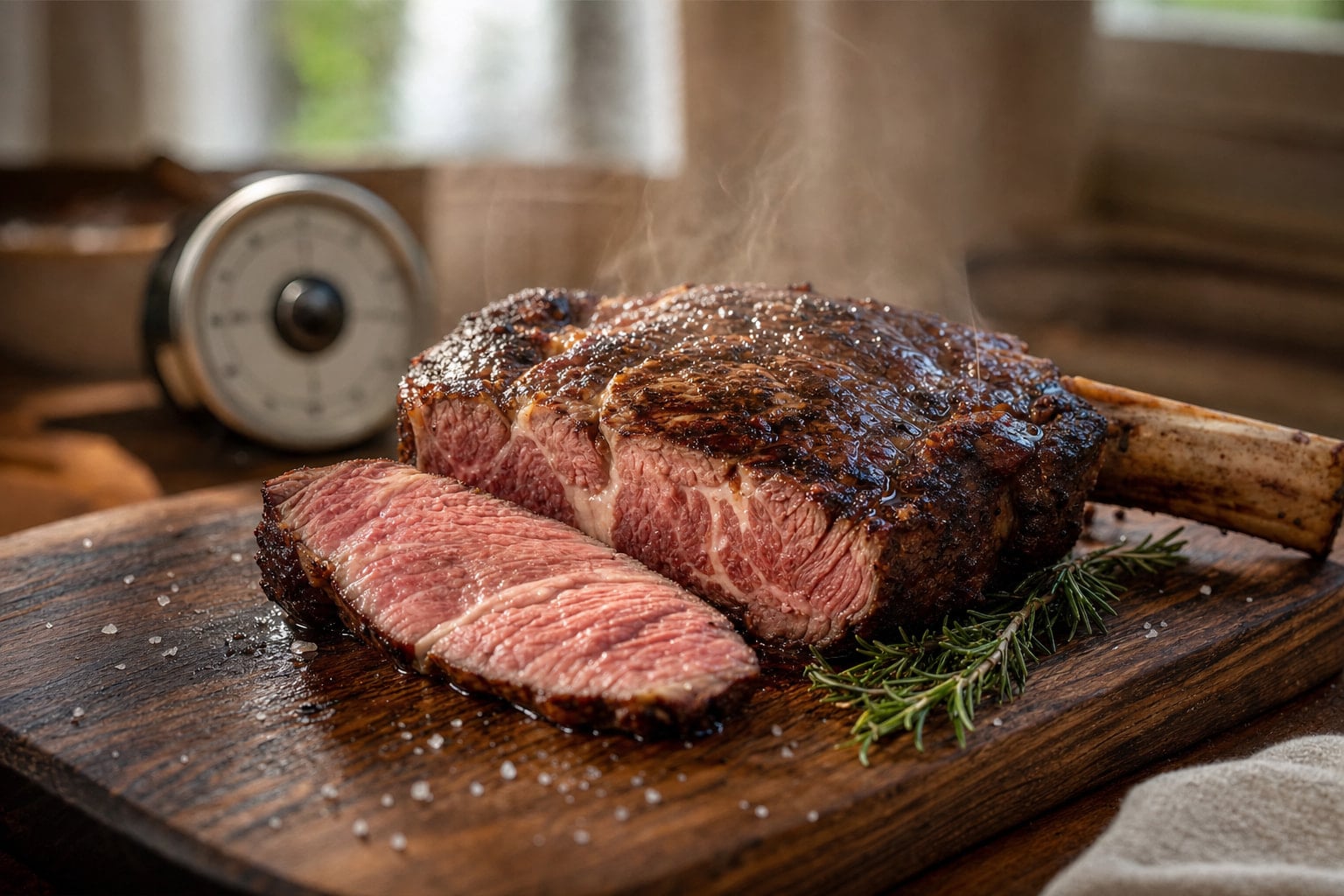
Marbling refers to the white streaks and flecks of intramuscular fat running through the red muscle of the steak. When heat is applied, that fat renders and bastes the meat from the inside, producing the rich, buttery flavor ribeye is known for. A lean ribeye, by contrast, can taste dry and one-dimensional even when cooked perfectly.
The USDA Agricultural Marketing Service grades beef based largely on marbling. The three grades most relevant to restaurant and home cooking are:
| USDA Grade | Marbling Level | Typical Source |
|---|---|---|
| Prime | Abundant to moderately abundant | Young, well-fed cattle; top ~2% of graded beef |
| Choice | Slight to moderate | Most steakhouses and quality grocery stores |
| Select | Slight | Budget retail; leaner, less flavorful |
Beyond USDA grades, some producers use their own marbling standards. Japanese Wagyu beef uses a Beef Marbling Score (BMS) from 1 to 12, with BMS 6 and above considered premium. American Wagyu crosses typically fall between BMS 4 and 8.
Even within a ribeye, fat placement varies. The spinalis dorsi, the cap muscle that wraps around the outside of the ribeye, is the most marbled and most flavorful part of the entire cut. A ribeye cap steak, when sold separately, is considered by many chefs to be the best single cut on the animal.
The short answer is yes, but not dramatically. A bone-in ribeye (often called a cowboy cut when thick-cut, or a tomahawk when the long rib bone is left intact) holds heat more evenly during cooking and insulates the meat near the bone, which can result in a slightly different texture in that section. The bone itself contributes collagen and trace minerals that affect the overall flavor profile.
Practically speaking, the bigger advantage of a bone-in ribeye is thickness. Cowboy cuts typically run 1.5 to 2.5 inches thick, which makes it easier to develop a hard sear on the outside without overcooking the center. That thickness is what allows techniques like the reverse sear to work properly.
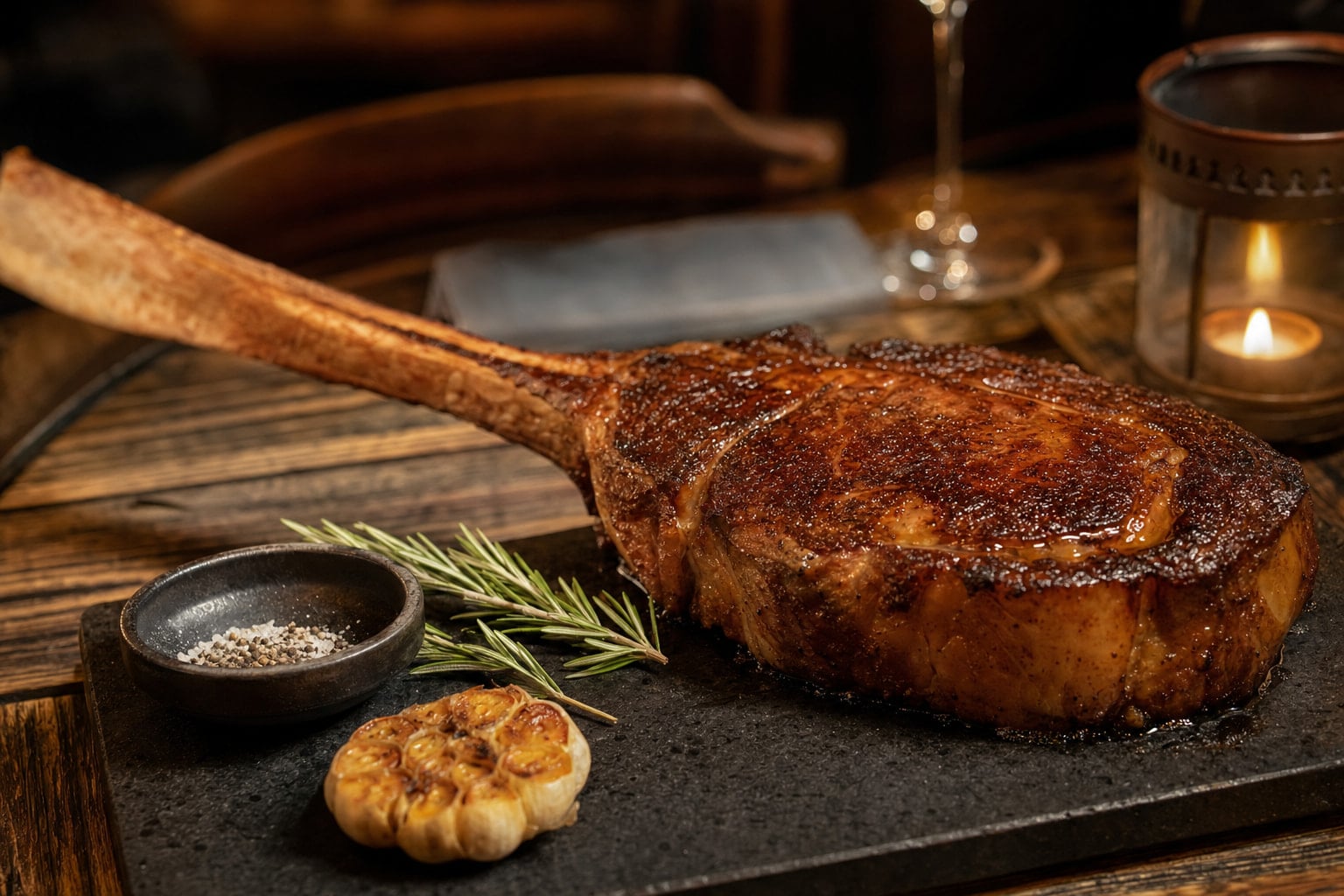
The tomahawk is a bone-in ribeye with a rib bone left long, usually 6 to 8 inches. The long bone doesn’t add flavor beyond what a standard cowboy cut provides, but it does make for a dramatic presentation. At a restaurant, you’re paying partly for that visual experience. The meat quality is the same as any other bone-in ribeye from the same animal.
Steak preparation covers everything from how the meat is seasoned before cooking to the method used to apply heat and the resting period after. Each step compounds on the others. A well-marbled ribeye handled poorly will still disappoint; a Choice-grade ribeye prepared with care can be exceptional.
The key preparation steps, in order:
The resting period is where a good ribeye becomes a great one. Skip it and you lose the juiciness that all the marbling was supposed to deliver.
Internal temperature is the most reliable way to hit your target doneness, and for a ribeye, the target matters more than for leaner cuts because fat renders at different rates. The USDA recommends a minimum safe internal temperature of 145°F for whole muscle beef steaks, followed by a 3-minute rest.
Most steak enthusiasts and chefs pull a ribeye slightly below the final target because the internal temperature continues to rise during resting (carryover cooking adds roughly 3°F to 5°F):
| Doneness | Pull Temperature | Final Rested Temperature |
|---|---|---|
| Rare | 120°F | 125°F |
| Medium-Rare | 125°F to 128°F | 130°F to 135°F |
| Medium | 135°F | 140°F to 145°F |
| Medium-Well | 145°F | 150°F to 155°F |
Medium-rare is the most commonly recommended doneness for a ribeye because the fat renders fully without the muscle fibers tightening to the point of toughness. At medium-well or well-done, even a Prime ribeye loses much of its textural advantage.
Aging is a deliberate process that changes the flavor and texture of beef after slaughter. There are two methods: dry aging and wet aging.
Dry-aged beef is stored uncovered in a temperature- and humidity-controlled environment for anywhere from 21 to 90 days. Moisture evaporates (concentrating the flavor), and natural enzymes break down muscle fibers, making the steak more tender. A 45-day dry-aged ribeye has a noticeably nutty, almost funky depth that a fresh-cut steak doesn’t have. The tradeoff is cost: dry aging results in significant weight loss and requires careful handling.
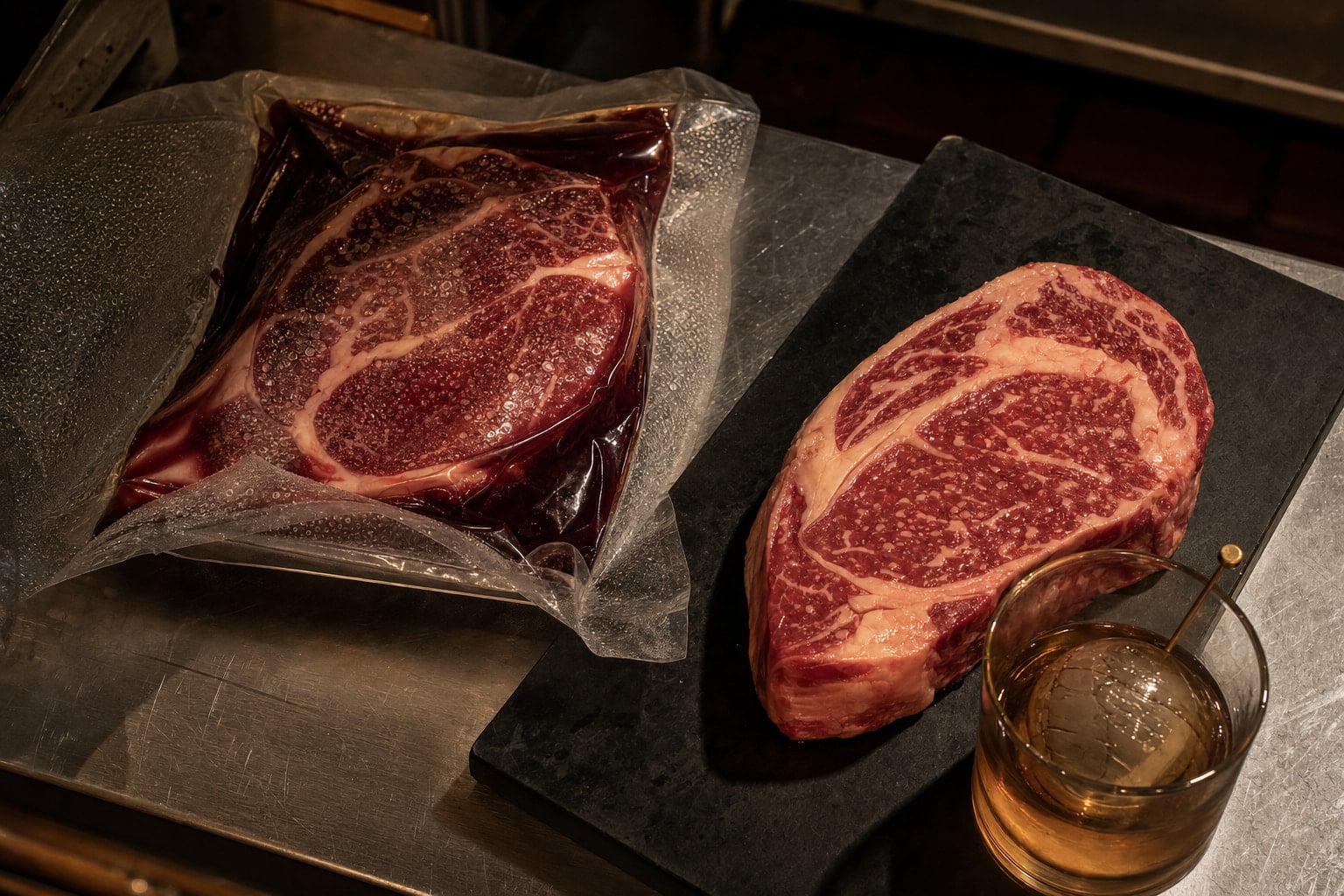
Wet-aged beef is vacuum-sealed and aged in its own juices, typically for 7 to 28 days. It’s more common in commercial settings because there’s no weight loss. The result is a more tender steak than fresh-cut, but without the concentrated flavor complexity of dry aging.
When you’re ordering a ribeye at a restaurant, it’s worth asking whether the beef is aged and by what method. That single question tells you a lot about how seriously the kitchen approaches the cut.
Ordering a great ribeye at a restaurant is easier when you know what questions to ask and what the menu language actually means. Here’s what to pay attention to:
If you’re dining in Myrtle Beach and want to pair a great steak with craft cocktails and a full Southern-influenced menu, take a look at the 44 & King food and drink menu to see what’s on offer before you come in.
For a broader look at what the Myrtle Beach dining scene has to offer beyond steak, the post on best Southern comfort food in Myrtle Beach covers the local dishes worth knowing about.
Myrtle Beach’s coastal humidity and heat do affect the outdoor grilling experience, though the steak itself doesn’t change. High humidity slows the formation of a dry crust on the exterior of the meat, which is why many local restaurants and serious home cooks prefer cast iron or a covered grill to control the cooking environment more precisely.
Seasonally, the Grand Strand area sees a lot of outdoor dining from spring through early fall. If you’re eating outside, a thicker cut holds its temperature better between the kitchen and the table. A 1.5-inch ribeye stays warm through a leisurely meal in a way that a thin-cut steak won’t. For more on the outdoor dining experience along the Myrtle Beach coast, the guide to outdoor dining in Myrtle Beach is worth a read.
Ready to put this to the test? Call 44 & King at (843) 626-5464 or make a reservation online to secure your table.
A ribeye comes from a low-activity muscle in the rib section, which means it develops more intramuscular fat than cuts like sirloin or flank. That fat, called marbling, renders during cooking and produces the rich, buttery flavor ribeye is known for. No other commonly available cut matches it for flavor intensity at the same price point.
For most diners, yes. Prime beef has significantly more marbling than Choice, which translates directly to more flavor and a more forgiving cooking window. That said, a well-prepared Choice ribeye from a quality source can rival a poorly handled Prime cut. Grade matters, but preparation matters just as much.
Medium-rare, around 130°F to 135°F after resting, is widely considered the best doneness for a ribeye. At this temperature, the intramuscular fat has rendered fully and the muscle fibers are still tender. Cooking beyond medium causes the fat to render out rather than stay in the meat, which reduces juiciness noticeably.
A ribeye should be at least 1 inch thick, and 1.5 inches is better. Thicker cuts allow you to develop a hard sear on the outside while keeping the center at your target temperature. Thin ribeyes cook through too quickly and are harder to control, especially on a hot grill or cast iron pan.
The ribeye cap, or spinalis dorsi, is the outer muscle that wraps around the top of the ribeye. It’s the most marbled and most tender part of the cut. Some butchers and restaurants sell it as a standalone steak. If you see ribeye cap on a menu, it’s generally the most flavorful option available from that section of the animal.
Dry aging concentrates flavor by removing moisture and allows natural enzymes to tenderize the muscle fibers over time. A ribeye aged 30 to 45 days develops a nutty, complex depth that a fresh-cut steak simply doesn’t have. It’s a genuine quality difference, not just a marketing term, and it’s reflected in the price.
Bold red wines like Cabernet Sauvignon and Malbec are classic pairings because their tannins cut through the fat in a well-marbled ribeye. Bourbon-based cocktails work similarly, with the oak and vanilla notes complementing the char on the crust. If you’re looking for cocktail options to go with a steak dinner in Myrtle Beach, check out the 44 & King happy hour for current drink offerings.