
From cornbread to collard greens, Southern side dishes aren’t an afterthought. They are the meal. A well-built plate of Southern food lives or dies by what surrounds the main, and in Myrtle Beach, where Low Country cooking runs deep, those sides carry real flavor history. The best ones are slow-cooked, seasoned with intention, and built on techniques passed down through generations of Southern kitchens.
This guide breaks down the side dishes that define Southern cooking, what makes each one work, and why they belong on any serious Southern table. If you’re planning a night out and want to know what to order alongside your main, this is where to start.
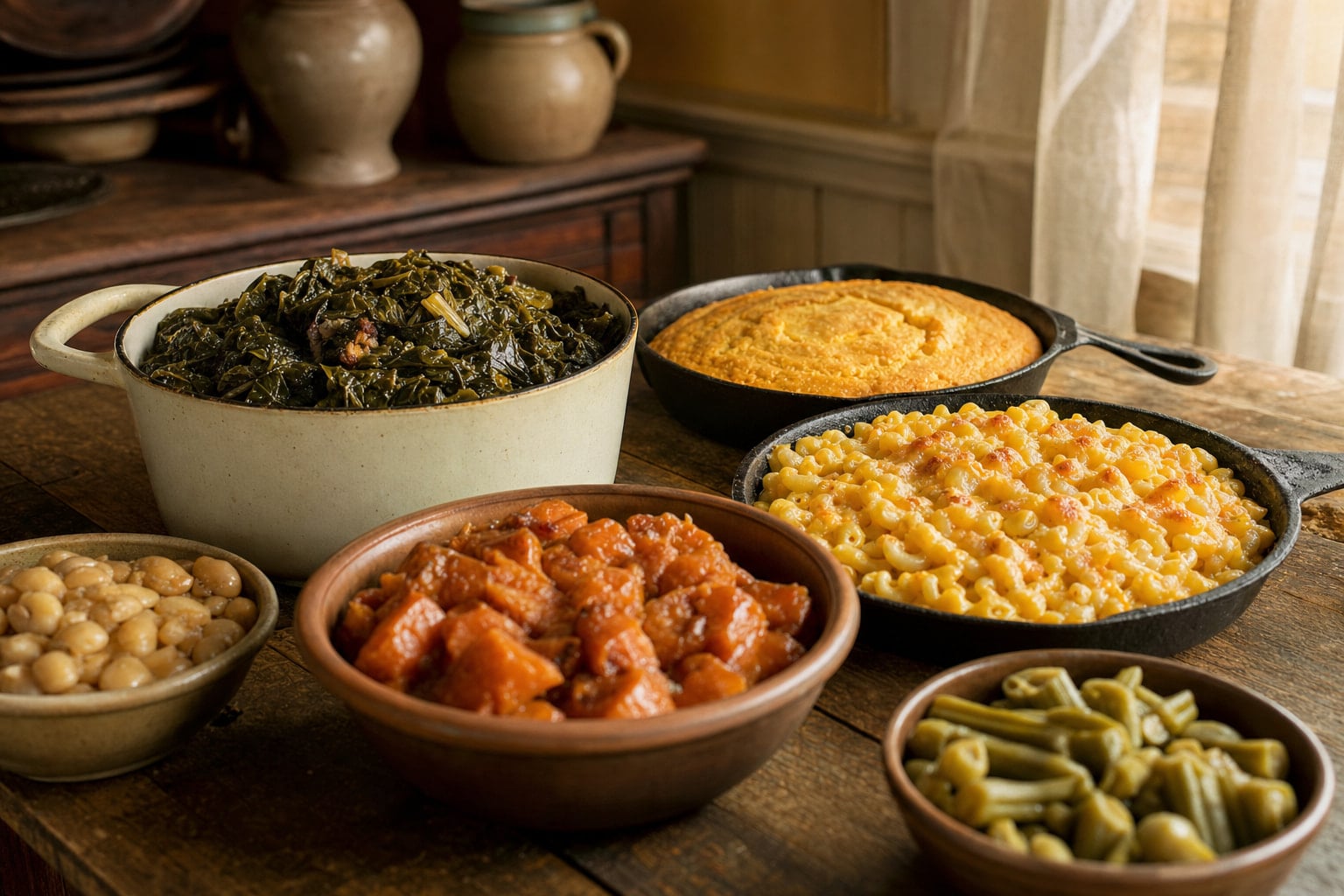
Southern sides aren’t filler. They balance fat with acid, richness with brightness, and texture with tenderness. A plate of smoked pork without braised greens or a scoop of mac and cheese is missing its counterweight. The sides do structural work.
Low Country cooking, which shapes a lot of what you’ll find in Myrtle Beach, draws on West African, English, and Native American food traditions. That layered history shows up in the ingredients: field peas, rice, okra, and slow-cooked greens all trace back to those roots. Understanding that context makes the food taste better, because you know what you’re eating and why it’s built the way it is.
Here’s a quick look at the most common Southern sides, what they’re made from, and what they pair best with:
| Side Dish | Key Ingredients | Best Paired With |
|---|---|---|
| Cornbread | Cornmeal, buttermilk, fat (lard or butter) | Braised greens, beans, BBQ |
| Collard Greens | Collards, smoked meat, pot likker | Cornbread, fried chicken, pork chops |
| Mac and Cheese | Pasta, sharp cheddar, eggs, evaporated milk | Smoked meats, fried fish |
| Fried Okra | Okra, cornmeal breading, hot oil | Catfish, shrimp, pulled pork |
| Field Peas / Hoppin’ John | Black-eyed peas, rice, smoked pork | Cornbread, collards, ham hocks |
| Biscuits | Flour, butter, buttermilk | Gravy, fried chicken, honey |
| Coleslaw | Cabbage, vinegar or mayo dressing | BBQ, fish tacos, fried chicken |
| Sweet Potato Casserole | Sweet potatoes, brown sugar, pecans | Roasted pork, turkey, ham |
Cornbread is the anchor of the Southern table. A good cast-iron skillet cornbread has a crisp, dark bottom crust, a tender crumb, and just enough fat to carry the flavor of the meal it’s sitting next to. It’s not sweet, or at least it shouldn’t be. Sweet cornbread is a Northern adaptation. Real Southern cornbread is savory, made with stone-ground cornmeal, buttermilk, and either lard or butter.
The ratio matters. Too much flour and it turns cakey. Too little fat and it dries out. The best versions come out of a well-seasoned cast iron pan that’s been preheated with fat so the batter hits a hot surface and forms that bottom crust immediately.
Cornbread’s real job is to soak up pot likker, the deeply flavored liquid left in the pot after collard greens have been braised low and slow with smoked meat. That liquid is one of the most flavorful things on a Southern table, and cornbread is the vehicle for it.
Collard greens done right take time. The leaves are tough and slightly bitter raw, but after two to three hours of low, slow braising with smoked ham hocks or smoked turkey, they turn silky, deeply savory, and complex. The pot likker they produce is as important as the greens themselves.
A few things separate good collards from flat ones:
In Myrtle Beach and across the Low Country, collards show up on tables year-round, not just in winter. They’re a staple, not a seasonal dish.
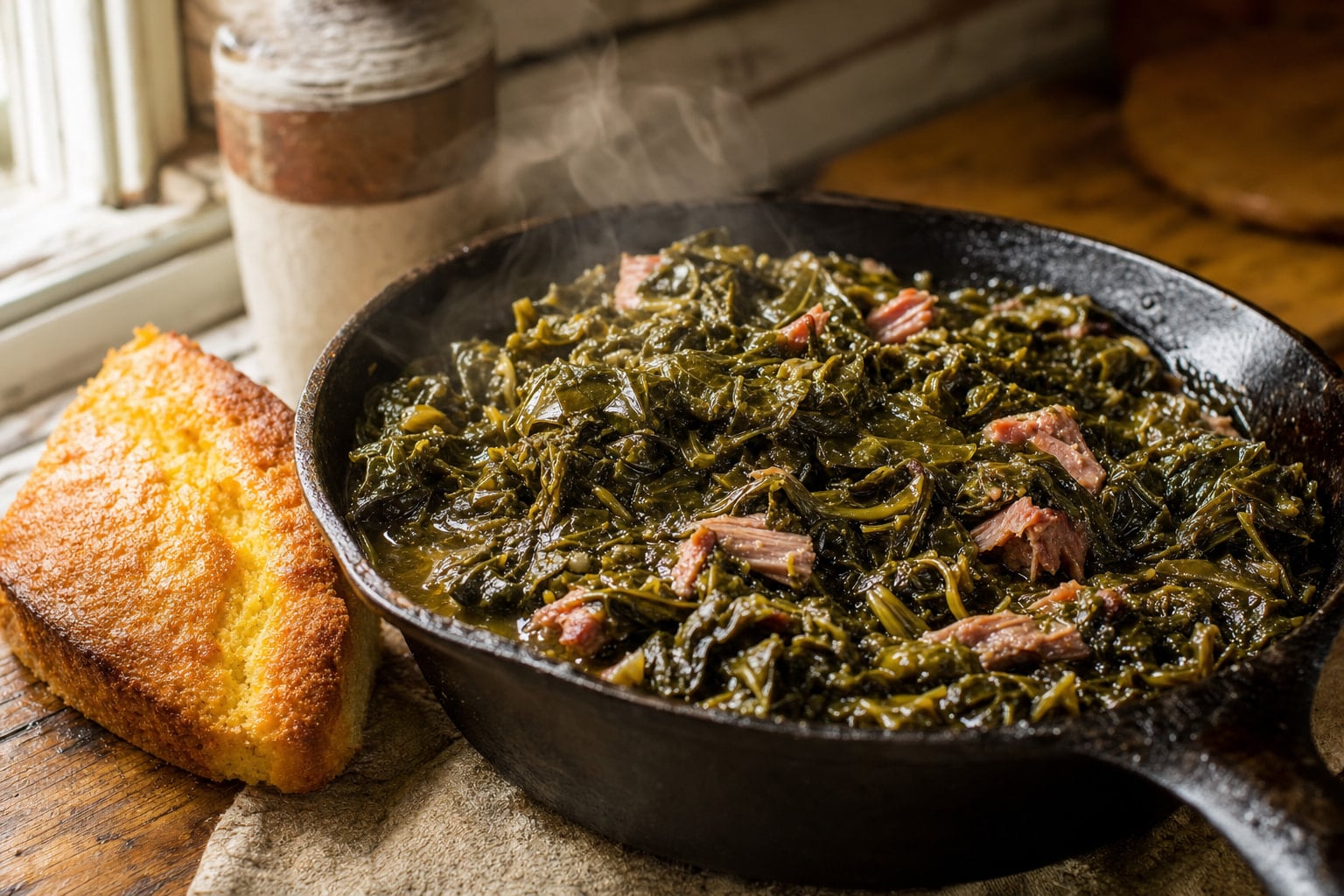
The sides aren’t supporting the main. On a real Southern plate, they’re sharing the lead.
Southern baked mac and cheese is not the stovetop version. It’s built on a custard base of eggs, evaporated milk, and sharp cheddar, poured over cooked pasta and baked until the top is set and slightly browned. The result is sliceable, dense, and rich in a way that stovetop mac never achieves.
The cheese choice is important. Sharp or extra-sharp cheddar gives the most flavor. Some cooks add a second cheese, Colby or Gruyère, for melt and stretch. The egg ratio determines the texture: more eggs produce a firmer custard, fewer give a creamier, looser result.
This is the version you’ll find at church suppers, family reunions, and the better Southern restaurants in Myrtle Beach. It’s a side dish that can hold its own against smoked brisket, fried catfish, or pulled pork without getting lost.
Okra is polarizing. People who grew up eating it love it. People who had it boiled and slimy once never came back. Fried okra is the version that converts skeptics. Sliced into rounds, dredged in seasoned cornmeal, and fried in hot oil until golden and crisp, it loses the sliminess entirely and picks up a satisfying crunch.
Okra has deep roots in Low Country cooking, brought to the American South through the West African food traditions of enslaved people. It shows up in gumbo as a thickener, in stews, and on its own as a fried side. In Myrtle Beach, you’ll find it on menus that take their Southern food seriously.
The key to good fried okra is oil temperature. If the oil isn’t hot enough (around 350°F is the standard target), the cornmeal coating absorbs oil instead of crisping, and you get greasy, soft rounds instead of the crunch you’re after.
Hoppin’ John, black-eyed peas cooked with rice and smoked pork, is one of the most historically significant dishes in Southern cooking. It’s eaten on New Year’s Day across the South for good luck, but it’s a year-round staple in Low Country kitchens. The combination of legumes and rice reflects the West African culinary traditions that shaped this region’s food culture.
Field peas more broadly, including crowder peas, lady peas, and zipper peas, are a summer crop in South Carolina. Fresh field peas cooked with a smoked ham hock and served over rice with a side of cornbread is one of the simplest and most satisfying meals in Southern cooking. The peas have a creamier, earthier flavor than dried beans, and the pot likker from a good pot of field peas is worth drinking straight.
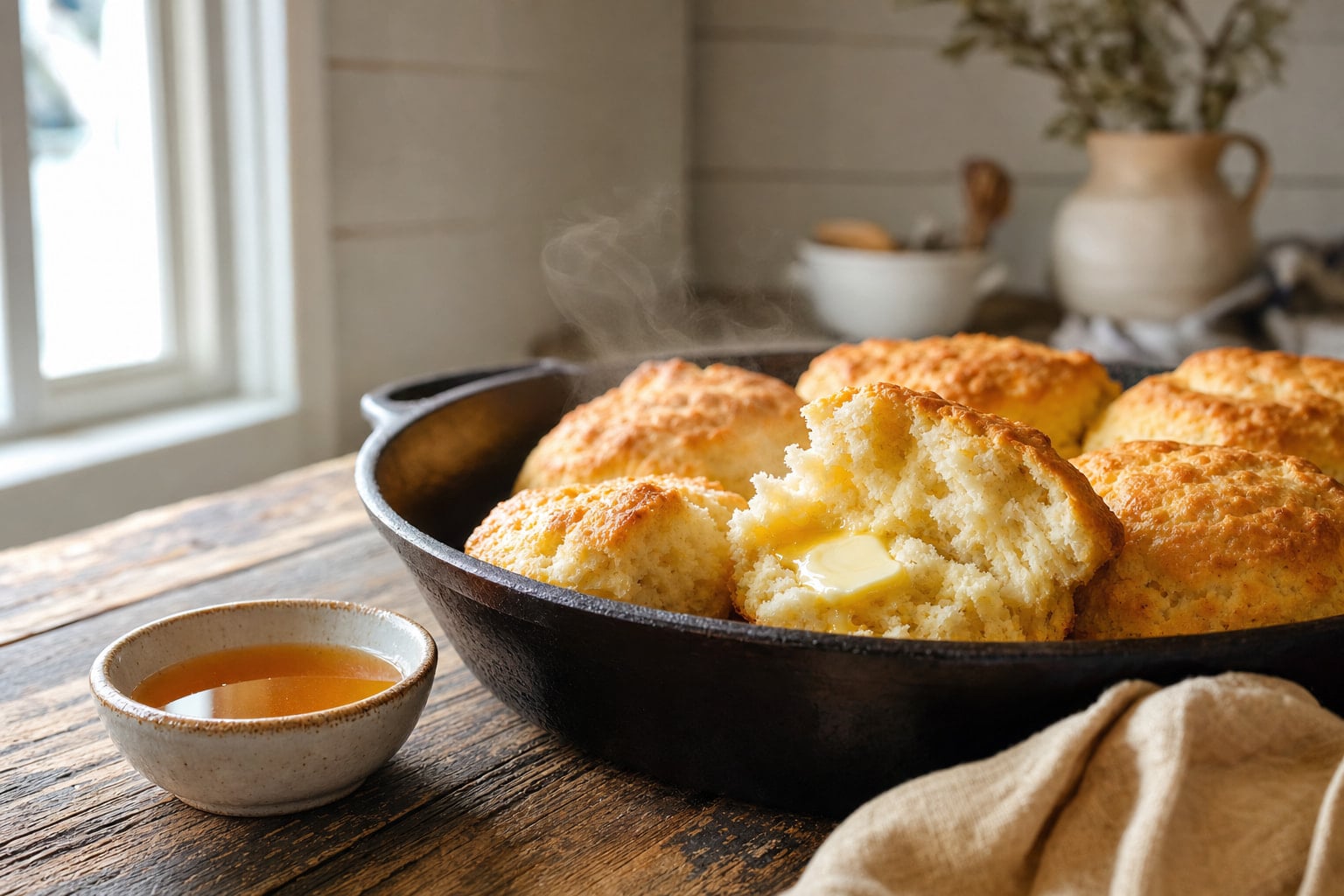
A Southern biscuit is a specific thing. It’s made with soft winter wheat flour (White Lily is the traditional brand in the South), cold fat cut in by hand, and just enough buttermilk to bring the dough together. The result is tall, flaky, and tender, with distinct layers that pull apart.
Biscuits work as a side dish, but they also work as a vehicle. Split and topped with sausage gravy, they become a full breakfast. Stuffed with fried chicken, they become a sandwich. Served alongside a bowl of field peas, they soak up the broth the same way cornbread does.
The technique is the whole game with biscuits. Overworking the dough develops gluten and produces a tough, dense result. Handle the dough as little as possible, keep everything cold, and don’t twist the cutter when you stamp them out (twisting seals the edges and prevents rise).
Good coleslaw does something specific on a Southern plate: it cuts through fat. A vinegar-based slaw next to smoked pork or fried fish provides the acid contrast that makes the whole plate feel balanced rather than heavy. Mayo-based slaw is richer and works better alongside lighter proteins or as a topping on a sandwich.
In the Low Country and coastal South Carolina, you’ll find both styles. The vinegar version tends to be thinner and brighter. The mayo version is creamier and more substantial. Neither is wrong. The question is what else is on the plate.
Southern side dishes aren’t a category you can shortcut. The techniques are specific, the ingredients matter, and the history behind each dish is part of what makes the food worth eating. If you want to experience these sides done properly in Myrtle Beach, the place to start is a restaurant that takes its Southern food seriously.
At 44 & King in Myrtle Beach, the menu is built around Southern comfort food with the kind of attention to detail these dishes require. Take a look at the full 44 & King food and drink menu to see what’s on the table. If you’re planning ahead, you can also check out what’s happening on the upcoming events calendar or browse the best Southern comfort food in Myrtle Beach for a broader look at the dishes worth ordering.
Ready to come in? Make a reservation at 44 & King or call (843) 626-5464 to plan your visit.
The most traditional Southern sides include cornbread, collard greens, mac and cheese, field peas, fried okra, biscuits, and coleslaw. These dishes trace back to the food traditions of the American South, shaped by West African, Native American, and English culinary influences. Each one has a specific technique that separates a good version from a flat one.
Southern cornbread is savory, not sweet, made with stone-ground cornmeal, buttermilk, and lard or butter, and baked in a cast iron skillet. The sweet, cake-like cornbread common in Northern recipes is a different product. The cast iron skillet gives Southern cornbread its signature crisp bottom crust.
Collard greens need at least two to three hours of low, slow braising to reach the right texture and flavor. Shorter cook times leave the leaves tough and the flavor underdeveloped. The liquid left in the pot, called pot likker, is a key part of the dish and is traditionally sopped up with cornbread.
Southern baked mac and cheese uses a custard base of eggs, evaporated milk, and sharp cheddar, producing a firm, sliceable texture when baked. Stovetop versions rely on a roux or processed cheese and stay creamy and loose. The baked version is denser, richer, and holds up better as a side dish next to heavy proteins.
Hoppin’ John is a dish of black-eyed peas cooked with rice and smoked pork, rooted in West African culinary traditions brought to the American South. It’s eaten on New Year’s Day across the South because black-eyed peas are considered a symbol of good luck and prosperity. It’s also a year-round staple in Low Country kitchens.
Myrtle Beach restaurants with a focus on Southern comfort food typically offer collard greens, mac and cheese, cornbread, fried okra, field peas, and biscuits. The Low Country food tradition is strong in this part of South Carolina, so you’ll find sides that reflect both classic Southern cooking and coastal influences. Check the menu at 44 & King for current offerings.
Yes, for most people. Fried okra loses the sliminess that puts many people off raw or boiled okra. When sliced, coated in seasoned cornmeal, and fried at the right temperature (around 350°F), it becomes crisp and nutty with no trace of the texture that makes boiled okra unappealing. It’s one of the most effective ways to introduce okra to skeptics.
The best way is to order at a restaurant that treats the sides as seriously as the mains, not as an afterthought. Look for places that slow-cook their greens, bake their mac and cheese, and make their cornbread in cast iron. In Myrtle Beach, 44 & King is a good starting point for Southern comfort food done with care.