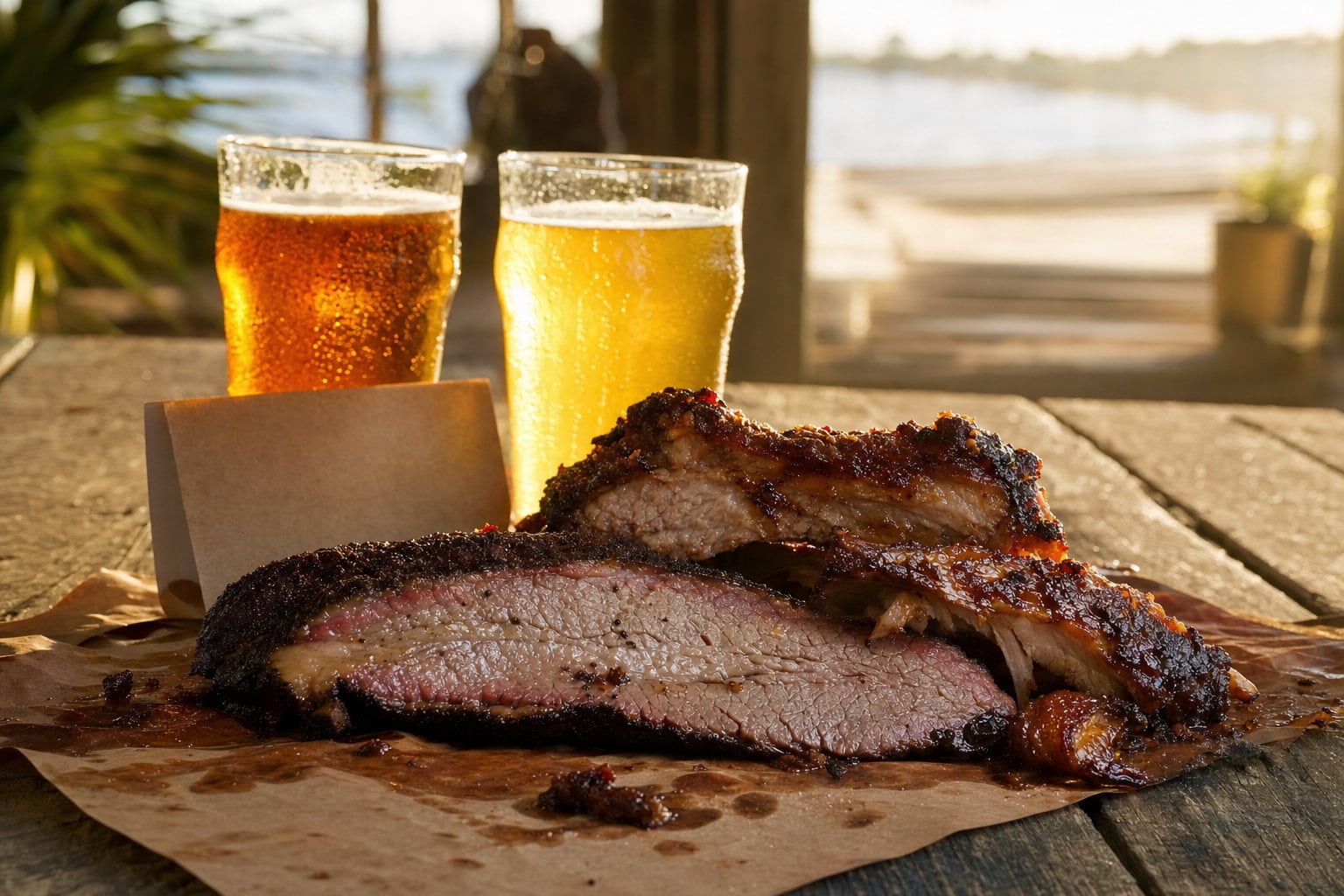
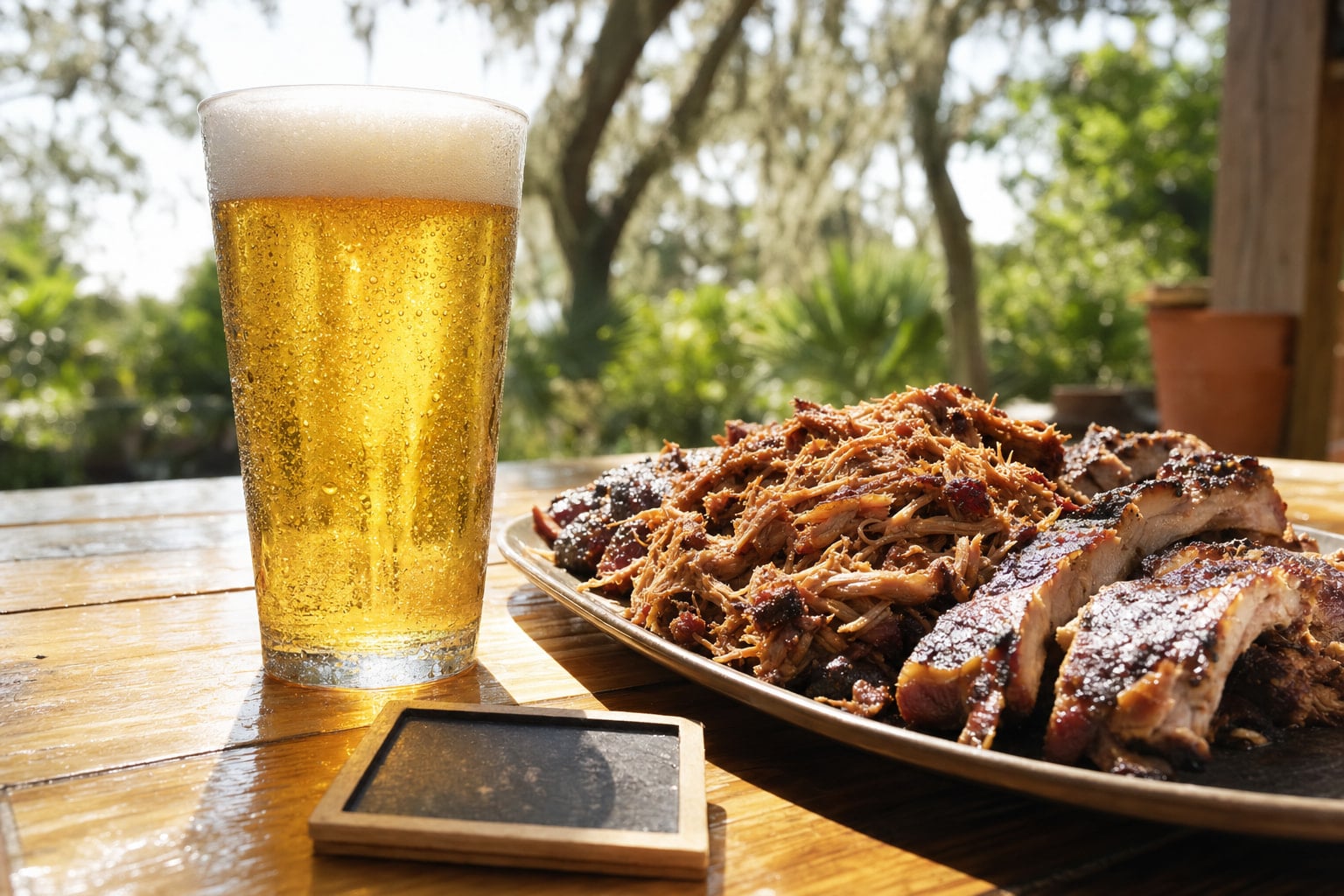
The Art of Pairing Southern BBQ with Craft Beer: A Myrtle Beach Dining Guide
The art of pairing Southern BBQ with craft beer in Myrtle Beach comes down to one principle: match intensity with intensity. A heavily smoked brisket needs a beer bold enough to stand up to it, while a vinegar-pulled pork calls for something crisp and low-bitterness. Get that balance right and every bite tastes better. Get it wrong and one overpowers the other.
This checklist walks you through the key decisions, cut by cut and sauce by sauce, so you can build a pairing that actually works at the table.
1. Know Your BBQ Cut Before You Pick a Beer
The cut determines fat content, smoke penetration, and texture, and those three factors drive your beer choice more than anything else. A lean smoked chicken breast and a fatty pork belly are both “BBQ” but they need completely different beers.
Check whether the protein is lean or fatty. Fatty cuts (brisket, pork belly, spare ribs) need carbonation and bitterness to cut through the fat. Lean cuts (chicken, turkey breast) pair better with malt-forward or wheat-based styles.
Note the smoke level. Heavy oak or hickory smoke calls for a roasty or caramel-malt beer. Lighter fruit-wood smoke (apple, cherry) works with lighter ales and wheat beers.
Consider texture. Tender, pull-apart meat like slow-smoked pulled pork pairs well with effervescent styles that refresh the palate. Chewy, bark-heavy brisket benefits from a beer with enough body to match it.
Factor in portion size. A full rack of ribs is a long meal. You want a beer that stays interesting over time, not one that fatigues your palate in the first few sips.
2. Match the Sauce Style to the Beer’s Flavor Profile
Sauce style is the second-biggest variable in a Southern BBQ pairing. A tangy vinegar sauce and a sweet molasses glaze are almost opposite flavor profiles, and the beer that works with one will fight the other.
Vinegar-based sauces (common in Eastern Carolina style): pair with a crisp lager, a Kölsch, or a dry wheat beer. The acidity in the sauce echoes the beer’s clean finish. Avoid heavily hopped IPAs, which can clash with the tartness.
Tomato-and-molasses sauces (Kansas City style, popular at many Myrtle Beach spots): pair with an amber ale, a brown ale, or a malty märzen. The caramel malt in these styles mirrors the sweetness in the sauce.
Mustard-based sauces (South Carolina Gold style): pair with a saison or a farmhouse ale. The peppery, earthy notes in a saison complement the sharpness of mustard without competing with it.
Dry-rub only, no sauce: this is where a smoked porter or a rauchbier shines. Without sauce sweetness to balance, you can lean into roasty, smoke-forward beer flavors.
Check whether the sauce is applied during cooking or served on the side. Sauce cooked into the meat is more integrated; sauce on the side means you can adjust the pairing sip by sip.
A Cold One Awaits
Stop reading about beer pairings and come pull up a stool at 44 & King.
IBU (International Bitterness Units) is a reliable shortcut when you’re scanning a beer list and need to make a fast call. Most craft beer menus list IBU, and knowing the right range for your food keeps you from ordering something that turns bitter against a sweet glaze or disappears next to a heavily spiced rub.
BBQ Cut
Sauce Style
Recommended Beer Style
IBU Range
Beef Brisket
Dry rub or light tomato
Smoked porter, brown ale
20–35
Pulled Pork
Vinegar or mustard
Kölsch, wheat beer, saison
15–28
Spare Ribs
Molasses or tomato-sweet
Amber ale, märzen
18–30
Smoked Chicken
Any
Pale ale, witbier
20–40
Smoked Sausage
Spicy or mustard
Pilsner, Czech lager
25–40
Pork Belly
Sweet glaze
Dunkel, dark lager
15–25
As a general rule, keep IPAs (typically 40–70+ IBU) away from sweet or vinegar-heavy sauces. Save them for spicy dry rubs or charred, bitter bark where the hop bitterness reads as complementary rather than harsh.
The best BBQ and beer pairing isn’t about finding the fanciest beer on the list. It’s about matching the weight of the food so neither one disappears.
4. Account for Myrtle Beach’s Climate and Setting
Myrtle Beach’s heat and humidity change what “refreshing” means at the table. A beer that feels perfectly balanced in a cool taproom can taste flat and heavy on a warm patio in July. The setting matters, especially if you’re dining outdoors along the Grand Strand.
Summer months (June through September): lean toward lower-ABV, higher-carbonation styles. A 4.5% Kölsch or a crisp Czech pilsner keeps you refreshed through a long meal without the fatigue of a 7% double IPA.
Fall and spring: this is prime season for malt-forward pairings. Amber ales, märzens, and brown ales all shine when the temperature drops into the 60s and 70s.
Outdoor dining: carbonation dissipates faster in heat, so order in smaller pours if you’re sitting outside. A half-pour of something cold beats a full pint that goes warm before you finish it. For more on making the most of Myrtle Beach’s outdoor dining scene, see outdoor dining in Myrtle Beach under the oaks.
Coastal seafood crossovers: if your table is mixing BBQ with shrimp or fish (common on the Grand Strand), a witbier or a light saison bridges both without clashing with either.
Check whether the venue has rotating taps. Myrtle Beach’s craft beer scene pulls from South Carolina breweries like Revelry, Frothy Beard, and Holy City, and local seasonal releases often align naturally with regional BBQ flavors.
5. Build the Full Table Experience, Not Just One Pairing
A BBQ spread is rarely one protein and one sauce. Most tables order multiple cuts, sides, and sauces, which means you need a strategy for the whole meal, not just a single match.
Start lighter, finish heavier. Open with a crisp lager or wheat beer alongside lighter starters. Move to an amber or brown ale when the brisket and ribs arrive. This mirrors how a good wine progression works.
Pick one beer that bridges the table. If your group is ordering four different proteins, an amber ale or a märzen is the safest all-rounder. It won’t be the perfect match for any single cut, but it won’t fight any of them either.
Don’t overlook the sides. Creamy mac and cheese softens bitterness, making a slightly hoppier beer taste more balanced. Vinegar-dressed coleslaw amplifies tartness, so avoid acidic beer styles alongside it.
Spicy sides change the equation. Jalapeño cornbread or spicy baked beans call for a malt-forward beer with low bitterness. Hop bitterness on top of capsaicin heat compounds quickly.
Plan for dessert. If banana pudding or peach cobbler is coming, a stout or a porter doubles as a dessert beer. Order one toward the end of the meal rather than mid-way through.
If your group wants to make a full night of it, check the upcoming events at 44 & King to see what’s on the calendar alongside dinner.
Skip the Guesswork
Our bar staff knows the drink list well and can point you toward something that works with whatever you’re eating.
Sometimes a pairing falls flat at the table. Here’s a quick troubleshooting checklist to diagnose what went wrong and fix it on the fly:
The beer tastes too bitter: the sauce is probably sweeter or more acidic than expected. Ask for a lower-IBU option, or order a side of plain bread to reset your palate between sips.
The beer disappears next to the food: the BBQ is heavier or smokier than the beer can handle. Move up to a darker, maltier style, or ask your server what the kitchen recommends alongside that specific cut.
Everything tastes flat: the beer may have warmed up. Ask for a fresh pour in a chilled glass, especially if you’re on a patio in summer.
The pairing worked at first but fatigues by the end: the beer is too similar in flavor to the food. A little contrast (a crisper, drier style) would have kept things interesting. Note it for next time.
The group can’t agree: order a flight of three styles and let the table vote. Most craft beer programs offer flights, and it turns the pairing into part of the experience rather than a commitment.
If you want to explore the full drink program before you arrive, browse the 44 & King menu to see what’s currently on tap and plan your pairings in advance. You can also check where to find the best happy hour in Myrtle Beach if you want to sample a few styles before committing to a full dinner pairing.
Ready to put this checklist to use? Reserve your table at 44 & King and let the kitchen and bar team help you build the right pairing for your meal. Call us at (843) 626-5464 to plan your visit.
FAQs
Which beer pairs best with beef brisket in Myrtle Beach?
A smoked porter or a brown ale is the strongest match for beef brisket. Both styles carry enough roasty, caramel-malt character to stand up to heavy smoke and a thick bark. Aim for an IBU range of 20 to 35 so the bitterness complements rather than overwhelms the meat’s natural fat.
Can you pair an IPA with Southern BBQ?
Yes, but selectively. IPAs work best alongside spicy dry-rub proteins or charred, bitter bark where the hop bitterness reads as complementary. Avoid pairing a high-IBU IPA (above 50 IBU) with sweet molasses or vinegar-based sauces, as the bitterness compounds and turns harsh against those flavor profiles.
What beer style works with South Carolina mustard-based BBQ sauce?
A saison or farmhouse ale is the best match for South Carolina Gold mustard sauce. The peppery, earthy notes in a saison echo the sharpness of mustard without competing with it. A dry wheat beer is a solid backup if the tap list doesn’t include a saison.
Does the Myrtle Beach heat affect which beer to order with BBQ?
It does. High humidity and summer temperatures above 85 degrees Fahrenheit make lower-ABV, high-carbonation styles more practical outdoors. A 4.5% Kölsch or a crisp pilsner stays refreshing through a long meal. Heavier styles like stouts and double IPAs are better suited to fall and winter dining when the Grand Strand cools down.
What is the safest all-around beer for a mixed BBQ spread?
An amber ale or a märzen is the most versatile choice when a table is ordering multiple cuts and sauces. The moderate malt sweetness and low-to-mid bitterness (roughly 18 to 30 IBU) won’t be a perfect match for every protein, but it won’t clash with any of them either.
Should I order a beer flight before committing to a full pint with BBQ?
A flight is a smart move, especially if you’re unfamiliar with the tap list. Most craft beer programs offer three to five sample pours, which lets you taste each style against a bite of food before committing. It also turns the pairing process into part of the dining experience rather than a guessing game.
Are there local South Carolina craft beers that pair well with BBQ?
Several South Carolina breweries produce styles that align naturally with regional BBQ. Breweries like Revelry Brewing, Frothy Beard, and Holy City Brewing (all based in Charleston, about 90 miles from Myrtle Beach) regularly release amber ales, saisons, and smoked porters that reflect local flavor preferences. Ask your server what’s currently on tap from regional producers.
Gift a Great Meal
If you know someone who loves good BBQ and a cold craft beer, a 44 & King gift card is a pretty solid move.